
Knives are thrown at a target in a lane – each lane consists of two targets. The target is pictured on this page. The bullseye is worth six points, the ring around it is worth five, then the ring around that is worth four, and so on outward. The two blue dots are called killshots, and are worth eight points. The black rings are all “out” – they score the lower value.
To score, the blade of the knife must be touching that scoring area. The pen lines around the bullseye and killshots count. If your guard is touching the board, or if your tip is not embedded in the wood, it will count as a zero. All knives are judged as they are at the end of the set, so if it falls out due to another knife, it’s a zero – but don’t worry, we’ve all been there.
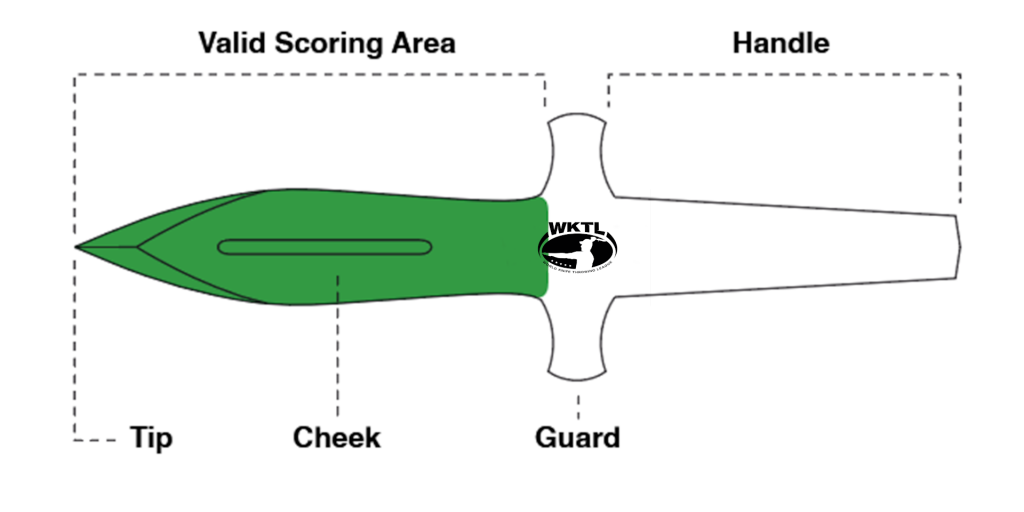
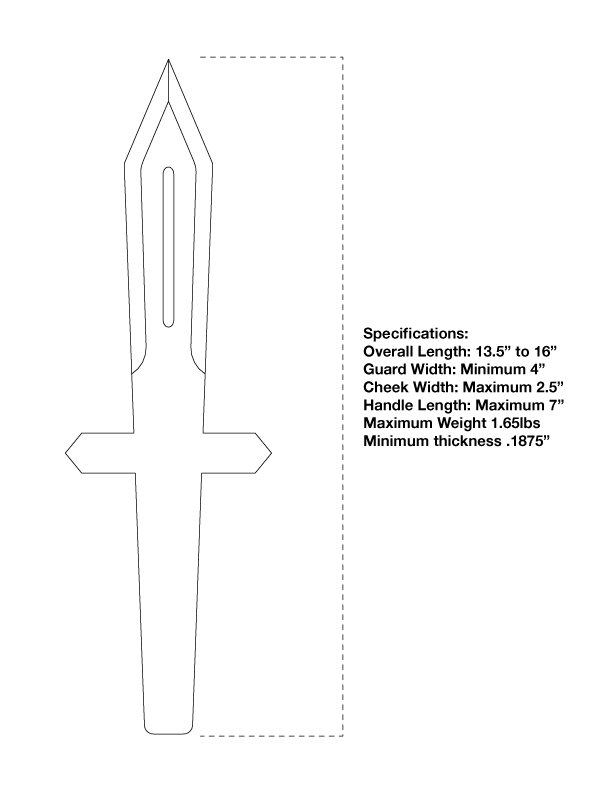
The knives we throw are at least 13.5 inches long with a total guard width of 4 inches and a maximum weight of 1.65 pounds. Currently, only knives produced by WKTL or Toro are legal to throw. If you don’t have knives, there’s a very good chance the venue you go to will have house knives you can borrow. But you can find a full list of league approved knives here.
Each game consists of 10 throws, divided into four sets. Players throw a set of three knives, then a set of two knives, then switch targets and do the same on the other side. In standard knives, the first two sets are a single rotation, and thrown with a fault line of 10 feet. The final two sets are thrown with two or more rotations with a fault line of 15 feet. In recreational knives, all sets are thrown from 10 feet. These lines will be marked at the venue. Crossing those lines while throwing will result in getting no points for that throw. Before each game, you’ll get at least one warm-up throw. When you register for a league, you’ll have the option of throwing standard or recreational knives – the choice is yours, and the only difference in the rules is throw distance. But once you switch out of recreational, you’ll need to submit an appeal to return to recreational, so be sure you’d like to switch!
It’s normal to tap knives with your opponent before the game starts, as you switch targets, and at the end of the game. You also usually tap knives if you’ve both called for a killshot. This is not required, but a common show of sportsmanship.
If you want to throw at a killshot you have to say so before you throw that knife. Most players say “going up” or “killshot” or point upward, but make sure your judge hears you. If you hit the killshot, it’s worth 8 points, but if you hit anything else, it’s not worth any points, so it’s a risk with a high reward.
If the game is tied after 10 throws, each player will stand at the back (the 15 foot line) and try to throw killshots. If one player hits and the other misses, that player wins. If after three throws nobody has hit, or both hit one on the same throw, the judge measures the closest non-hit knife, and that thrower wins.
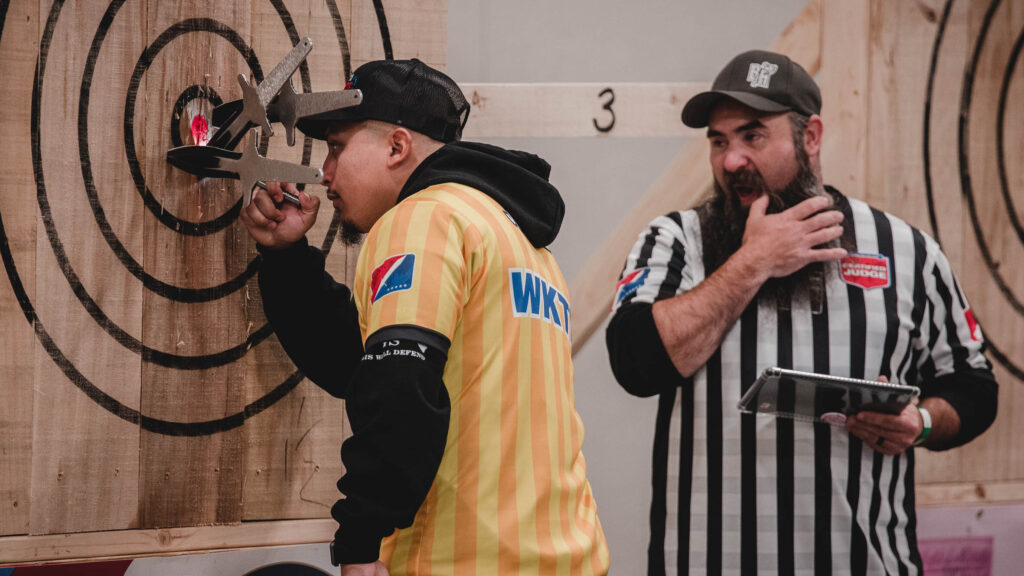
Each game will have a judge, who will check the knives after each set and announce the scores. If you disagree with the judge, you can challenge, or ask for a second opinion from a certified judge – usually players say “Second” or hold up two fingers. That score is final. Usually, the judges will be other league members or venue staff.
Feel free to ask questions. If you don’t know something, the league members and staff at your venue will be happy to explain it to you – throwers are friendly and helpful, in our experience, and happy to help people new to the community. If you have a rules question and your venue staff aren’t sure, you can always contact wktl@worldknifethrowingleague.org or our head judge, EJ Harris, at WKTLheadjudge@gmail.com, or walk up and ask any judge you see wearing a bright yellow jersey at a tournament.
Remember that like any skill, knife throwing will take time and practice to get good at. The people you see on TV or in your local league have been practicing for a long time, but they still drop and have bad games. Knife throwing is challenging, even compared to our sister sport, axe throwing, but it’s rewarding to master and fun to practice, so don’t put pressure on yourself to be good right away.